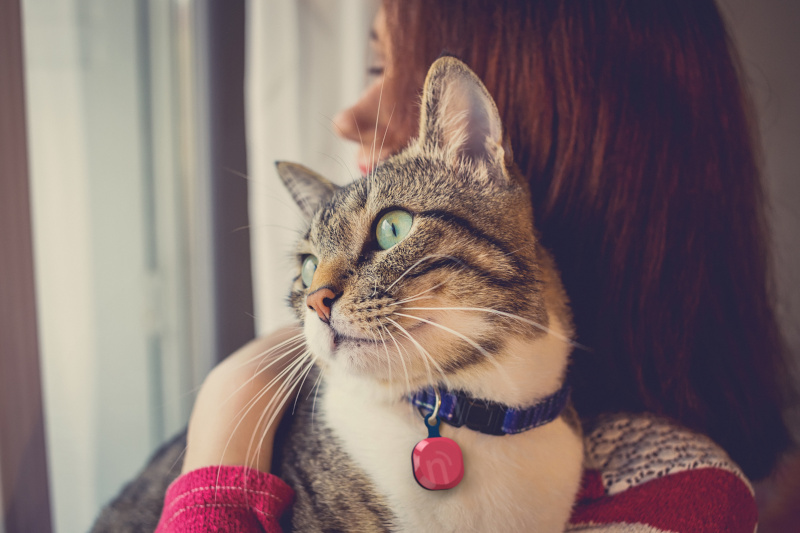
You surely know the feeling when a warm, fluffy kitten is dozing on your lap and you’re afraid to breathe too deeply in case you wake it up? You want the very best for your pet – you look after its needs, feed it, stroke it and spoil it. But are you sure your pet is completely safe? Find out how to keep your cat safe and look after its health.
1. Don’t let your cat outdoors
Why not? There are an awful lot of dangers lurking out there. Cars, rodent poison, aggressive dogs and wild predators (such as foxes, which are common in cities), not to mention… people with no empathy. An outdoor cat is also exposed to all sorts of diseases, many of them potentially fatal for cats. Contrary to popular belief, an indoor cat can be genuinely happy, especially if you provide it with the right conditions.
2. Secure your windows and balconies
It’s not true that a cat always lands on its feet. Even a fall from the first floor can be dangerous for a cat. So watch out for open windows and balconies – they should always be secured with special netting. Tilt windows are a hazard too, as a cat can get wedged in them.
3. Vaccinate and deworm
Yes, indoor cats should also be dewormed and vaccinated regularly. Even if your Mr Whiskers has no contact with other animals, household members and their guests bring in plenty of germs on their shoes that can pose a threat to your kitty. Your vet will set out a precise schedule of vaccinations and deworming.
4. Be careful with collars
Collars with a classic buckle or clasp should only be put on when you’re taking your cat for a walk and have it in sight the whole time. Whenever your cat is out of your control, the collar must be a safe, breakaway type. Otherwise a curious kitty could get caught up on it when jumping down from furniture, for example, and strangle itself.
5. Forget the bell
Many owners attach a bell to their cat’s collar to make it easier to find around the house or garden. Unfortunately, this kind of gadget makes a sound with the animal’s every movement, and the high frequencies can harm its sensitive hearing.
A much better and safer solution is the notiOne GPS PET, a lightweight GPS tracker that works with no subscription. With the free app, you can check where your cat is at any moment.
6. Check the nooks and crannies
Cats absolutely love hiding in the strangest places. The washing machine, the tumble dryer, the laundry basket, a drawer, even the inside of a guitar – there’s no hiding place your furry friend won’t explore. Before switching on any household appliance, always check that Mr Whiskers isn’t taking a sweet nap inside it. Household accidents like this happen more often than you’d think.
7. Dangerous chemicals
Be careful with the cleaning products you use at home. And it’s not even just about storing them safely (that too!), but about their ingredients. Remember that a cat that has walked across a freshly washed floor will shortly sit down in a corner and lick its paws – and that’s how all the chemicals from the floor end up in its delicate stomach. If you suspect poisoning, consult a vet as soon as possible and give them the names of the chemicals used in your home.
8. Cables, strings, ribbons, elastic bands…
A cat can chew through them, get tangled up in them, choke on them, or… eat them. With electrical cables there’s the added danger of electric shock. Remember that for a cat, playing with things like this can end really badly.
9. Poisonous plants
Many house plants, although they look innocent and are completely harmless to humans, can be a danger to cats. This applies both to potted plants and to those used in cut-flower bouquets. You can easily find a list of poisonous plants online – check whether any of them have found their way into your home.
10. Medicines and supplements
They save our health, but they can take a cat’s away. Remember that medication intended for humans can be very harmful to animals. Keep medicines in a safe, tightly closed container. And if you suspect your cat may have got at them, consult a vet immediately.