Not sure how taking a dog on a train works? How do you buy a ticket for your four-legged friend? Or maybe you are wondering what a train journey with a dog is actually like? In this article you will find out:
- how to get your dog used to travelling by train,
- how much a ticket costs,
- what the conditions are for taking your pet on board.
Check the operator’s rules before travelling with your dog
When planning a trip with your pet, you need to check the rules of the operator that will take you to your destination. Depending on the company running the service, there will be different requirements to follow when travelling with a dog. Some allow you to take a dog free of charge, while others reserve the right to exclude passengers with dogs if someone on board has an allergy to dog hair. So it is worth reading the rules before your trip!
Travelling with a dog by train is the most convenient option when you don’t have your own car. Not only does this mode of transport not ban you from travelling with your pet when someone with a hair allergy turns up in the carriage, it also offers far more space than, say, a coach. And it is worth adding that it doesn’t cost much.
How to get your dog used to train travel – a few words about preparation
Before the journey, take your four-legged friend for a long walk so that it can relieve itself. If you have a very long journey ahead, make sure your dog gets plenty of exercise beforehand, along with activities that satisfy its natural needs (such as sniffing out treats or chasing a tug toy) – then there is a good chance it will sleep through most of the trip.
Also limit your dog’s food before setting off. If it hasn’t had a chance to travel before, you may find your pet suffers from motion sickness, in which case it may feel unwell in various ways during the train journey. Don’t overfeed your dog, but do bring a bottle of water and a small bowl, as it needs constant access to water.
How can you make the train journey more pleasant for your dog? You can bring its favourite toy. If it is a squeaky plush toy, make sure it isn’t too loud and doesn’t disturb other passengers. A Kong filled with treats (if you know your dog doesn’t suffer from motion sickness) or a special paste made for the purpose is an excellent idea. If your pet doesn’t have a toy like that, bring along the blanket, cushion or bed it uses every day. The familiar smell will certainly help it feel more confident in a new situation and, as far as possible, relax during the ride.
Can you take a dog on a train for free?
You can take a small dog free of charge if it is kept in a suitable carrier and doesn’t bother other passengers. Small animals usually don’t disturb anyone, but if fellow passengers object, you will have to find another seat or ask the conductor to point one out. What’s more, other smaller pets, such as cats, can also travel in a carrier. When carrying your pet this way, you have to place it in the space intended for hand luggage or on your lap. The latter option is definitely better – your pet will feel safer in a new situation when it can sense you are close.
If your dog is larger, you will need to buy it a ticket. The fare for a dog on PKP Intercity trains is a flat rate of PLN 15.20.
How to buy a train ticket for a dog online?
You can do it online at www.intercity.pl when selecting your own ticket. Simply fill in the ticket purchase form, where you can add the option of travelling with a dog.
If you don’t do it straight away when buying your ticket, you can do it at the ticket office, and the dog will be added to your printed or electronic ticket.
You can also buy a dog ticket on PKP trains directly from the conductor, but you should expect an additional fee of PLN 10.
Where to sit with a dog on the train?
Choosing the right spot when travelling with a dog by train is very important. A dog in a carrier is no problem at all, but a four-legged friend travelling freely needs enough room to lie down.
If you are travelling in a compartment carriage, you need the consent of all the passengers present in the compartment to travel with your dog. When boarding the train, it is a good idea to find an empty compartment, which will then only be joined by passengers who have no problem with a dog being there.
Open-plan carriages make travelling with a dog much easier, as the extra space and reduced direct contact with other passengers give both the owner and the dog itself more comfort.
A dog is also not allowed to sit on the seats on the train. This is both stated in the rules and likely to bother other passengers.
Should a dog wear a muzzle on the train?
The rules clearly state that a dog must wear a muzzle on the train for the entire journey. This is particularly important in compartment carriages, where there is little space and contact with other passengers is much closer. In addition, you need to carry your dog’s health record book and a certificate of rabies vaccination. It is a good habit to remember these documents whenever you travel with your pet. Some operators also make this a requirement in their rules.
How to keep your dog safe on the train?
Depending on its character, a dog may be skittish, prone to running off or barking at everything around it. In a stressful situation such as a first train journey, it may also behave differently from usual and surprise its owner. Before you start travelling by train, it is worth familiarising your dog with the conditions at the railway station by taking it there for walks. This will let it get used to the characteristic sounds trains make and the crowds of people on the platforms.
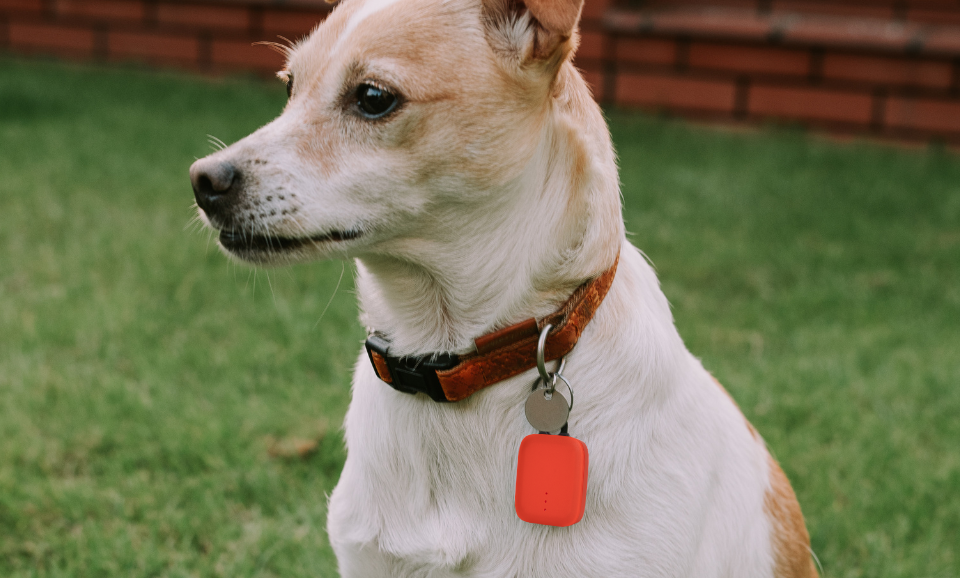
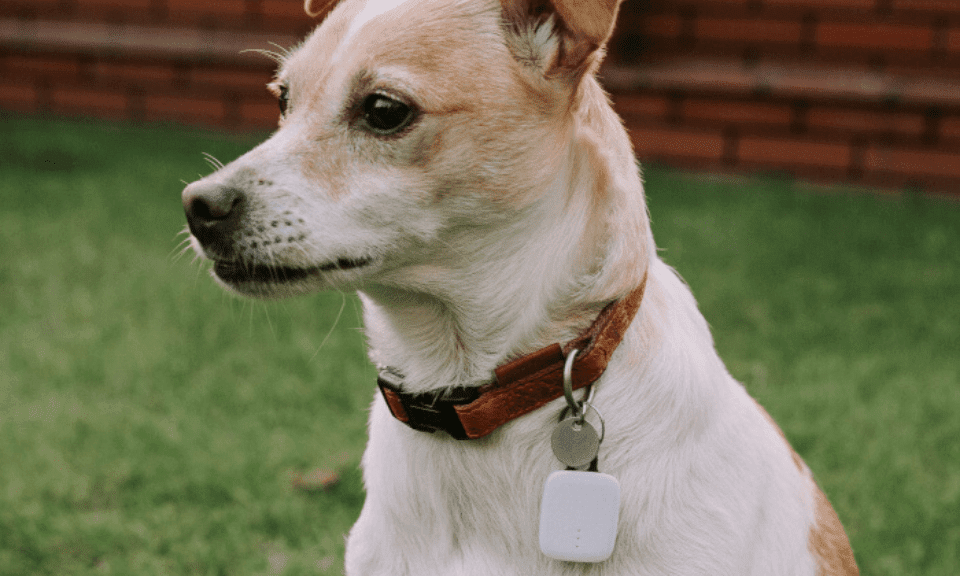
There are situations, however, when despite our best efforts we lose control of our dog and it slips its leash at the station. An event like this is hugely stressful for the animal and for us. To keep your dog safe, it is worth investing in a notiOne tracker. It is a small device that can be attached to the collar right next to the ID tag, and if your dog runs off, you can easily locate it in the free app. A tracker of this kind makes no sounds that could harm sensitive canine ears, it is waterproof and it runs for a very long time on a single battery. The device is light and comfortable and, most importantly, it will let you find your dog when it bolts from the platform to the other side of town.
Travelling with a dog by train – remember this!
When setting off on a train journey with your dog, look after its comfort and prepare the two of you properly for the trip. Above all, remember:
- water for your dog and a bowl – collapsible silicone bowls are available that you can attach to the leash or tuck into a backpack without taking up much space,
- favourite toys or a familiar blanket,
- documents – the dog’s health record book and the rabies vaccination certificate,
- buying a ticket for your pet,
- filling in the ID tag (the dog’s name, your address and phone number) attached to the collar or harness,
- and if you want to be sure you can easily pinpoint your dog’s location if it runs off – a notiOne go! PLUS tracker too.
A dog’s first experience of train travel can be very stressful, so it is worth preparing properly.
We wish you a pleasant journey and plenty of positive adventures! Or perhaps your first trip is already behind you and you would like to share some tips with others travelling with their four-legged friends? We would love to hear about your experiences!