In winter, everything in the mountains looks like a postcard… The 2026 winter school break (ferie) is already under way, so it’s a good time to look at how to keep it safe. And this isn’t a piece written to scare you off your planned trip. We just want to help you get your head into the right mode: “I’m going to relax, so I’m not doing things that later cost me stress and chaos”.
The numbers are merciless. TOPR (the Tatra Volunteer Search and Rescue) summed up 2024 in the Tatras: rescuers helped 1,330 people (hikers, climbers and skiers), which is 36% more than the year before, and 18 incidents were fatal. And on the slopes? A study covering recreational skiing and snowboarding estimated the average injury rate at around 1.97 per 1,000 “skier days”. In other words, this isn’t “one in a million”. It’s the everyday reality of the season. And that season is precisely the winter break.
Now the good news: most problems can be avoided. Not by “being more careful” (that sounds nice but means nothing), but through a few simple rules plus a plan B for the situations that happen anyway.
If you don’t have any plans for your trip yet, be sure to check out our blog post: Where to go for the winter break in 2026.

Problem 1: “We got lost”, or no point of reference
On a winter break, people don’t “get lost” the way they do in films. Usually the group just drifts apart: someone goes to get lift passes, someone goes to the toilet, someone has already got on the chairlift and someone is still adjusting their boots. And suddenly nobody knows who is where. As we know, this can spoil even the best-planned winter trip.
The solution is simple, it just has to be specific: a meeting point. Not “by the entrance”, because there are several entrances, but something impossible to confuse: the map board at the bottom station, a specific restaurant with a name, a distinctive sign. A fallback rule also works well: “if we get separated, we come back here on the hour”.
This is exactly the part people have in mind when they try to organise a winter break and turn it into an actual winter holiday. Because a plan doesn’t kill the fun: a plan protects it and saves time.

Problem 2: Children in a crowd, or “I looked away for 3 seconds”
A seemingly trivial problem, until (as always) it happens to us. And the solution is very quick and simple: the STOP rule plus a simple backup. The STOP rule goes like this: if a child can’t see their parent, they stay where they are and ask a member of staff for help. They don’t run off to “look”. This needs to be said before the trip and repeated calmly, not in the middle of a crisis.
And this is where plan B comes in, the one that really does end up being a “phew, that made sense” moment.
How trackers help in real situations (without selling you magic)
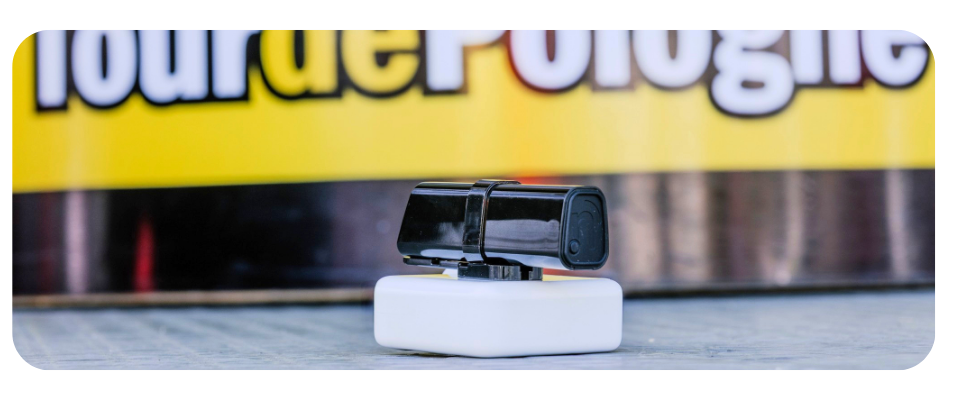
If you attach a notiOne go! PLUS to your child’s backpack, you get several features that cut short the stressful searching:
- in the app you can see the last known location of the item with the tracker (e.g. the backpack)
- you can trigger a sound signal (useful when “it’s somewhere around here” but you don’t know where)
- you can add a message for the finder (e.g. a phone number) — this is gold when something gets left in a restaurant, cloakroom or at the ticket desks
- if another user happens to be near your lost tracker, its position can update thanks to the community network
- within a family, location sharing also works, so there’s no “one person in charge of keeping track of everything”
And an important clarification: notiOne go! PLUS is Bluetooth, so it’s not a “GPS that covers half the mountain”. In a given area, such as the slopes, it should do the job just fine.

Problem 3: The slope – “I’m a good skier, so this doesn’t apply to me”
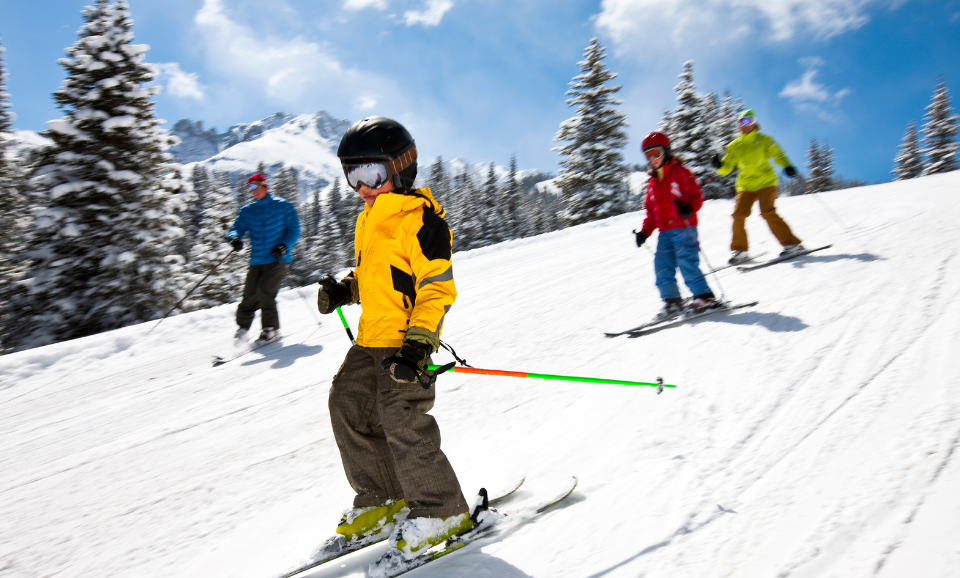
During the winter break, most problems on the slopes aren’t caused by a lack of skill, although that does have some influence on how things unfold. What matters a lot is the crowd, poorer visibility, tiredness after a few hours and breaks taken in the wrong places. Places where you shouldn’t stop, even though in theory everyone knows what safety on the slopes looks like. In practice, the biggest classic is stopping in the middle of the run or “just over the crest”, exactly where others have no chance of seeing you in time. This is especially noticeable when you go during the school break calendar and the runs are packed. It’s typical of skiing trips during the winter break. Then, even if you ski brilliantly, all it takes is one person next to you turning the wrong way and things get tense. So, as the saying goes, you always “need eyes in the back of your head”
A solution that always works: you only stop where you are visible and not blocking others, ideally at the side or on a wide section of the run. If you take a break, take it “smartly”, not “just anywhere”. Simple, but in real life it saves the day more often than the best gear, because it limits the accidents that come not from skiing technique but from chaos.
Problem 4: “Just up to the mountain hut”, and then it gets dark and slippery
In the winter mountains, “just a walk” can turn within an hour into an ice rink, a fast-falling dusk and a phone that suddenly loses battery faster. Remember that sub-zero temperatures have a significant impact on battery life. And suddenly a winter holiday stops being a holiday. Instead of enjoying the trail, you start counting the minutes and wondering whether you’ll make it back safely.
The solution is trivial, but it always works: before heading out, pack a head torch (because a phone is a mediocre torch and it’s a waste of battery), something warm to drink, a small first-aid kit and a power bank. Nothing big, it seems, but it’s precisely these “boring” things that make winter activities and a winter trip end in a great story rather than an unpleasant logistical operation.
As for what to take on a winter trip to the mountains, we’ve covered that here –> How to prepare for a winter trip to the mountains

Problem 5: Gear and belongings on a winter break trip
This is the part hardly anyone thinks about before the trip, and everyone remembers afterwards: gear, luggage or the car. A winter break is worth planning so as to minimise “looking for things”, because that is the biggest thief of holiday time.
If you want protection “over a larger area” (e.g. luggage, valuables, equipment), then notiOne GPS PLUS makes sense here, because in a crisis it’s not just about whether something is close to your phone. Depending on the scenario, these features come in handy:
- LIVE mode – when something is on the move and you want to check its position “in real time”
- location history – to retrace the route when something went missing “along the way”
- zones (geofencing) – when you want a notification that the monitored item has left or entered a designated zone
- anti-theft alert – when your car is parked in a car park and you want peace of mind that everything is OK. You’ll receive a notification when vibration or movement of your car is detected
The ideal device for monitoring your protected belongings from practically anywhere. The battery provides a long operating time and will comfortably last for several weeks of use.
The bottom line: it pays to prepare in advance for a relaxed winter break
It’s true: it pays to prepare in advance so that the winter break is relaxed. A safe trip isn’t paranoia. It’s comfort. You don’t want to be “the bravest”. You want to spend time calmly and take a break from everyday life. If I had to leave you with one thought: plan A is the rules, plan B is the tools. One without the other works so-so. Together they work brilliantly, and precisely in those moments when a trip starts to get tense.