The first night your dog spends away from home – without you, in a new place, in the care of someone you’ve only just met – can keep you awake at night. And that’s fine, because it means you treat your pet as a member of the family. The good news is that almost all of that stress can be broken down into individual steps and ticked off one by one. This guide is a practical checklist that walks you through your dog’s first overnight stay with a pet sitter step by step – from choosing the sitter, through what to pack, to staying in touch once you’ve walked out of the door.
Start by choosing the right sitter
Peace of mind doesn’t begin on the day you pick your dog up – it begins when you choose the person you’re entrusting them to. Before you even think about packing, make sure the sitter has genuinely been vetted.
If you look for someone on your own – through classified ads or friends of friends – it’s hard to verify their experience and the conditions your dog will be staying in. That’s why many owners choose platforms that do the vetting for them. On Petsy, for instance, you’ll only find a pet sitter once they’ve passed a verification process – just 1 in 10 candidates meets the criteria. On top of that, every review is tied to a real booking, so you’re reading the accounts of people who actually left their dog there.
What to look out for when browsing profiles:
- Experience and specialisation – has the sitter already looked after dogs of your dog’s size and temperament? For anxious dogs, seniors or pets recovering from surgery, it’s worth looking for someone with behavioural or veterinary training.
- Conditions at home – is there a garden, does the flat have a lift, are there other animals or children living there?
- Reviews and photos – genuine accounts of previous stays say more than the prettiest description.
If you’re specifically looking for an overnight stay for your dog at a sitter’s home rather than a short visit, arrange a meet-and-greet before booking. A short walk somewhere neutral or a visit to the sitter’s home lets your dog get to know the new surroundings calmly, and lets you see how the two of them get on. This is especially important for a first overnight stay and for sensitive dogs.

Checklist: what to pack and what to tell the sitter
A dog feels more confident when familiar smells are close by and their daily routine stays the same. Your job is to bring a piece of their world into the sitter’s home – and to equip the sitter with everything they might need.
Your dog’s things:
- Food for the whole stay (with a little extra), pre-portioned or with an exact measuring scoop
- Food and water bowls, if your dog is used to them
- A bed or blanket that smells of home – a security anchor for the new night
- Leash, harness and collar with an ID tag
- A favourite toy and something to chew on to relieve stress
- Medication (if your dog takes any) with the dosage and times written out
- Poo bags, a towel and possibly a paw-wiping mat
Information for the sitter – written down, not just said out loud:
- Daily schedule: feeding, walk and nap times
- The commands your dog knows and their habits (e.g. “not allowed on the sofa”, “afraid of thunderstorms”)
- Habits and fears: how they react to other dogs, bikes, loud noises
- What to do when the dog is stressed or refuses to eat
- Your vet’s details and consent to act in an emergency
- Your phone number and a “back-up” contact person
Putting this information in writing isn’t overkill – it’s the simplest way to make sure the sitter doesn’t have to guess and you can be certain nothing slips through. Good dog care platforms let you save some of these arrangements directly in the booking, so you have them all in one place.

Safety from a distance: stay in touch with your pet
The biggest worry during a first overnight stay comes down to one thing: you can’t see what’s happening. That’s why it’s worth setting up two channels of reassurance in advance.
The first is contact with the sitter. Agree that you’ll get a photo or a short message after the evening walk and in the morning – many sitters do this naturally, but it’s better to agree on it explicitly. If you book through a platform like Petsy, you communicate in the app, so your whole relationship with the sitter is in one place, together with photos from the stay.
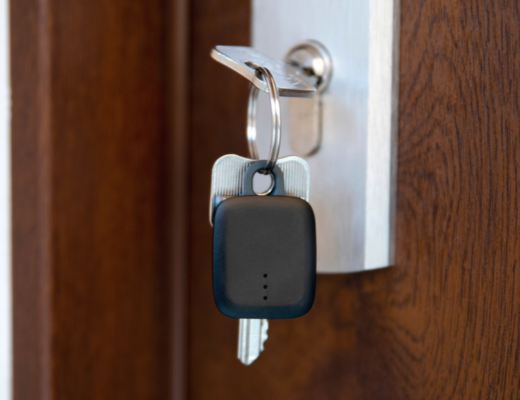
The second channel is a GPS tracker for your dog. It’s a solution that gives you a real sense of security precisely during a first stay away from home — because your dog is in unfamiliar surroundings, and every walk is a new route. You clip the notiOne GPS PET PLUS tracker to the collar and follow your pet’s position in real time in the free app – accurate to within a few metres, in Poland and abroad, with no subscription. You can also set up safe zones and receive a notification if your dog leaves them.
It’s protection for the scenario nobody wants: the dog gets spooked on a walk and slips the leash, or sneaks out through a gate left ajar. In an unfamiliar area where they don’t know the way home, minutes matter – and that’s when seeing their location on a map turns panic into concrete action. It’s a good idea to put the dog tracker on as early as the meet-and-greet, so your dog has time to get used to it.

The first night: how to reduce your dog’s stress (and your own)
The goodbye itself is usually the hardest moment – for both sides. A few small things really help:
- Say goodbye calmly and briefly. Long, emotional scenes at the door only convince your dog that something bad is happening. A simple “bye, see you soon” works better.
- Leave something of yours. An unwashed T-shirt or pillowcase with your scent is a simple way to calm your dog in a new place.
- Stick to the routine. Ask the sitter to keep meal and walk times close to what they are at home – predictability lowers stress.
- Don’t bombard the sitter with calls. One agreed update in the evening is enough. An adult dog needs anywhere from a few to a dozen or so hours to settle into new surroundings – it’s normal for them to be withdrawn on the first evening.
If your dog suffers from severe separation anxiety, consider starting with a shorter form of care – a single night instead of a week, or an earlier home visit or walk with the same sitter. Getting used to things in small steps usually works better than being thrown in at the deep end.
Emergency plan: prepare for the unlikely
Being responsible doesn’t mean assuming something will go wrong – it means being ready in case it does. Before you leave, make sure the sitter has:
- Your vet’s details and those of the nearest 24-hour clinic
- Written consent to start emergency treatment and an agreed cost limit up to which they can act without consulting you
- Your number and a back-up number for someone who knows the dog
Here, too, booking through a trusted platform has the edge. A stay booked through Petsy is covered by a support package that gives the sitter access to tele-veterinary care and consultations, and the stay is insured against unforeseen events. That way, in a difficult situation nobody is left alone with the problem – neither the sitter nor you.
Checklist to copy
Bringing it all together in one place – here’s a list you can tick off before you leave:
- Sitter chosen and verified, reviews checked
- A meet-and-greet has taken place
- Food, bowls, bed, leash, toys – packed
- Medication with the dosage written out
- Daily schedule, habits and fears written down
- Vet’s details + consent to emergency treatment
- Contact numbers handed over to the sitter
- GPS tracker fitted and checked in the app
- How and when you’ll be in touch during the stay agreed
- Something with your scent left with the dog
The first overnight stay doesn’t have to be a leap into the unknown
When the sitter is vetted, your dog has familiar things around them, and you can see their location on the map and get an evening photo – the first night stops being a source of anxiety and simply becomes the start of a routine you’ll both quickly come to like.
Take care of two things in advance: find a trusted dog sitter and protect your pet with a notiOne GPS tracker. You’ll tick off the rest from the list above – and leave with peace of mind.
FAQ – your dog’s first overnight stay with a pet sitter
Pack food, bowls, a leash, harness, bed, a toy, medication and something that smells of home. Add an ID tag and a GPS tracker too.
Pass on feeding and walk times, your dog’s habits, fears and medication, plus your vet’s details. Also leave your own number and a back-up contact.
Keep their daily routine and leave familiar items with them. The goodbye should be short and calm.
Yes, stress can temporarily reduce appetite. A longer refusal to eat, apathy, vomiting or diarrhoea require contacting a vet.
Yes. A tracker lets you quickly check your dog’s position if they run off or slip the leash in an unfamiliar place.
Start with a short walk or a few hours of care. Only then plan an overnight or longer stay.