IoT – this mysterious abbreviation is cropping up more and more often in all our daily lives. You may not realise it, but you come across it in most areas of life. The Internet of Things is present in shops, offices and even in your homes. What are some examples of devices that use this technology? Find out in our article!
What is the Internet of Things?
In short, IoT stands for the Internet of Things, which means a network of physical objects fitted with sensors, software and various technologies designed to connect and exchange data with other devices and systems over the Internet.
Such devices range from ordinary household items to complex industrial tools. It’s estimated that by 2025 there will be 22 billion devices connected to the IoT.
Which technologies does the Internet of Things use?
The IoT relies on the Internet to do its job, mainly via Wi-Fi, Ethernet or Bluetooth, or technologies such as Zigbee.
Internet of Things — examples of use
There are plenty of examples of IoT in use. You’ll find some in your own home, e.g. robot vacuum cleaners, air purifiers, security cameras, smart heating systems, thermostats, and even lamps and light bulbs.
One example of the IoT in use is smart lighting with motion sensors, which switches on when movement is detected or according to a pre-programmed schedule. Air humidifiers work the same way: you can set them to run in line with your daily routine.
You also use IoT devices when counting your steps on a smartwatch or tracking your training progress on a fitness band. Importantly, IoT devices are not phones or computers, as those require direct human interaction.
The advantages of using IoT technology
The Internet of Things makes homes, cities and businesses smarter. Appliances and devices understand their users better, which means they can respond to changes without needing the user’s attention.
A home equipped with IoT devices is safer and more convenient in everyday life. IoT devices also help look after the environment and reduce excessive noise.
IoT devices also let you protect your valuables against theft and easily find them if they get lost. That’s how GPS trackers work.
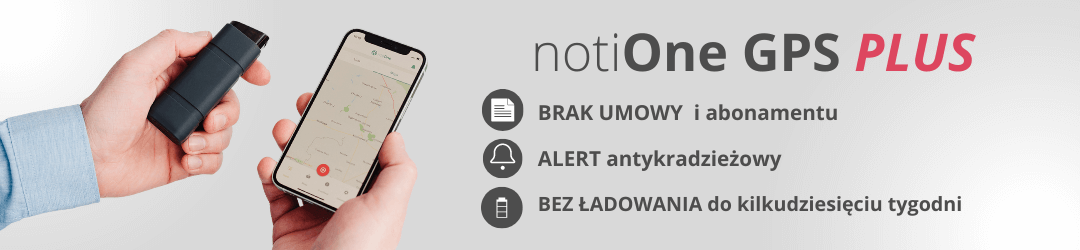
notiOne GPS and GPS PLUS trackers determine the position of an item using a satellite signal, via the GPS module inside them. Once the server receives the signal and analyses the data, the item’s position is sent straight to the map in the device owner’s app.

You can use GPS trackers in all sorts of ways, e.g. to protect a car, a bike, an e-scooter, luggage and many other valuable items you always want to keep an eye on.
The Internet of Things in retail
Using IoT applications allows retail companies to manage stock efficiently, improve the quality of customer service and optimise the supply chain while cutting costs. Familiar with self-service checkouts in supermarkets? They’re fitted with weight sensors that collect information about the products being scanned, such as vegetables, and calculate the right price for the quantity.
The Internet of Things in the automotive industry
IoT-based sensors can detect equipment faults in vehicles on the road and warn the driver of an impending failure. What’s more, using IoT sensors on production lines significantly improves the quality of car parts and helps avoid errors. The IoT is already at home in cars that can move without a driver, becoming autonomous vehicles.
The Internet of Things in logistics
The IoT works brilliantly in the transport and logistics sector. Fleets use it to monitor the work of drivers carrying goods. The cargo itself can also be protected, for example by sensors that track its temperature and alert the driver when readings fall outside the norm.
The Internet of Things in industry
The IoT is growing increasingly popular in the industrial sector. In this case the technology is called the Industrial Internet of Things, or IIoT for short. It forms the foundation of the fourth industrial revolution and makes use of the ability of instruments and devices to communicate with one another.
The aim of using the IIoT in industry is to automate tasks, optimise industrial processes and provide greater flexibility, which makes it possible both to increase productivity and to reduce costs.
One example of IIoT technology in industry is sensors that monitor machinery and send key data to dedicated platforms, allowing production to be supervised and downtime and breakdowns to be avoided.
The future of the Internet of Things
In the years ahead, the IoT will certainly be developed intensively, and its practical use will become even more widespread. 5G connectivity will help, enabling fast wireless data transmission from anywhere.
The development of the IoT will also be shaped by artificial intelligence, which will keep being refined so that it gets better and better.
In the future you’ll encounter the IoT in many places, not just in office spaces, but also in houses, flats, public places, factories and entire cities. The range of IoT devices grows more and more every day.
The Internet of Things and technology security
Many people still don’t trust the IoT because they’re concerned about the security of their data and their privacy. Every device collects information about everything a person does in order to get to know them as well as possible and tailor its services to their needs.
A simple example of this process is a smart robot vacuum cleaner scanning our home and the layout of our furniture so it can clean as efficiently as possible while avoiding any obstacles.
The main issue, however, is not that IoT devices gather data, but whether the manufacturers of these devices will secure it properly, or whether they’ll share it with third parties who will use it, for example, in advertising campaigns.