Sometimes life throws up situations where the locks in your doors have to be replaced. It might be due to damage, a key snapping off inside the lock, or losing the one and only set of matching keys. There are also times when you’ll be fitting locks in a new door for the very first time. How do you go about it? How do you replace old locks with new ones? What should you absolutely avoid doing? We’ve put together a handful of essential information to make the job easier for you.
A broken door lock – what should you do?
Door locks serve us every day, sometimes a dozen or more times in 24 hours. Inevitably they wear out and can also get damaged. A broken lock should be replaced or repaired as soon as possible, so that you don’t put yourself, your loved ones or your property at risk.
Locks can suffer two kinds of faults – mechanical and wear-related. In the first case, you’ll need to take the lock out of the door, dismantle it and look for the cause inside. Sometimes a small component needs replacing for the whole mechanism to work properly again. However, if the fault is more serious, the lock should be replaced with a new one.
A wear-related fault can be fixed by applying a suitable spray product, such as WD-40. Using it removes moisture and dirt from inside the mechanism, which improves how it works. And if corrosion is the cause, rust removers will help. If neither of these does the trick, then the lock should be replaced with a new one.
If you want to replace a door lock yourself, you first need to establish what the current model is and what its dimensions are, and then choose a suitable replacement. When picking a new lock, don’t skimp on the purchase – after all, it’s a matter of safety!
How to remove an old lock from a door
Once you have the right lock for your door, you need to remove the old one, taking care not to damage the door. A door lock usually consists of a steel case with the mechanism enclosed inside, and the whole thing is attached to a faceplate that allows the lock to be fixed to the door leaf. It’s held in place with two screws.
To remove the lock, you need to take off the handle first – its two grips are connected by a steel spindle that passes through the lock. External doors also have special cylinders – cylindrical components that pass through the lock and that the matching keys fit. These must also be removed before you can take the lock out of the door. To do this, you undo a single screw located in the lock’s faceplate, which holds the cylinder in place. Have the key for the cylinder ready – you’ll use it to position the cam so that the cylinder can slide out. Once you’ve undone the screws fixing the lock’s faceplate to the door leaf, the lock will slide out freely.

How to drill out a door lock
If you don’t have the key to the lock, you’ll need a drill with a metal drill bit. Apply it at the points where the pins are located (below the keyway). Drill slowly, pressing the bit gently, to the depth of the key’s teeth. This will drill out the pins.
Bear in mind, though, that with door lock models fitted with anti-drill protection you won’t get anywhere. In that case you’ll need the help of an emergency locksmith.
Fitting a new door lock
Once you’ve removed the lock from the door, you can check more precisely which model was fitted. And if you’ve already bought a new lock, all that’s left is to carry out the same steps we described above, but in reverse order. That is – first screw in the lock case and the cylinder, then check that the lock works properly and the door closes fully. The next step is to fit all the parts of the handle. Don’t overtighten the escutcheons – too much pressure can stop the lock working properly!

What tools do you need to replace a lock?
Before you start replacing a door lock, get the right tools ready. You’ll need:
- A cordless screwdriver – it’ll help you replace the cylinder and the lock in the door.
- A measuring and marking kit – it’ll let you measure the length of the cylinder and buy the right lock.
- Screwdrivers, socket spanners, Allen keys and hex keys.
- A drill, if you don’t have the key to the lock and the lock can be removed this way.
Also have a hammer, a wood chisel, a hacksaw and a silicone sealant gun to hand. They can come in useful both for repairs and for replacing an old lock with a new one.
A key broken off in the lock – what should you do?
You can try to remove a key that’s broken off in the lock yourself before calling a locksmith. First, check whether the lock is open or locked. If it’s somewhere “in between”, you need to turn the lock cylinder so that it’s in one of those two positions. Do this with a screwdriver or a pair of scissors, turning the cylinder until the lock clicks into the open or locked position – otherwise you won’t be able to get the broken key out of the door.
Before you attempt to remove the broken key, it’s worth spraying the lock with a special lubricant, which will reduce friction inside the cylinder and make the whole process easier.
If a small part of the key is sticking out of the lock, you can use a pair of needle-nose pliers to pull it out. Good lubrication of the lock should help free the key with a chisel and pliers.
And if these methods don’t help, you can use a strong magnet to help remove the broken key, or a specialist locksmith’s kit, which you can buy online. Remember, though, that DIY attempts to pull out a broken key can ruin the lock, and then it will have to be replaced!
How to open a door without a key
All sorts of situations in life can lead to a lost key. Sometimes it’s only when we get to the front door that we realise it’s missing. What do you do when you don’t have the key but want to get inside?
The best option is to call an emergency locksmith service, which operates in most Polish cities. Emergency locksmiths are properly trained for such situations and have the experience and the right equipment to open a door without a key – whether it’s to your home or your car.
Remember not to tamper with the lock using tools yourself, as you can permanently damage it, and then replacing it with a new one will be unavoidable! What’s more – modern anti-burglary locks won’t let amateurs crack them easily.

Getting a key cut – what you need to know
It’s best to avoid situations where there’s only one key and, once it’s lost, the only option is to fit a new lock. To do that, get a spare set of keys cut. You can have this done at specialist key-cutting shops by handing over the original key. The key is then copied and cut from a blank, and finished by hand to match the original.
Keys that come with a code card can only be copied by the manufacturer or at authorised outlets. This means nobody can get them cut without the owner’s consent.
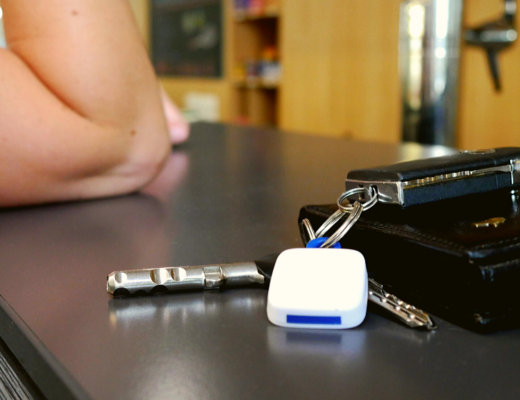
Keys often get lost in all kinds of situations. If you don’t want to end up having to replace the lock because they’ve gone missing, it’s worth having a spare set or a notiOne tracker, which will let you find them. You can attach it to your keys, so you’ll always be able to check their location on your phone!